Google Pay
by Google LLC
About this app
Google Pay is a payments service whose app features and availability differ by country. The current Google Play listing is tied to supported regional payment experiences rather than a single worldwide mobile wallet. In eligible markets, the app can support bank transfers, merchant payments, bills, and other local payment flows. In the United States, contactless card payments and stored passes are handled through Google Wallet, while the Google Pay button continues to appear for checkout in supported apps and websites. Treat Google Pay and Google Wallet as related but distinct products, and check Google's regional support information before relying on a feature.
Features
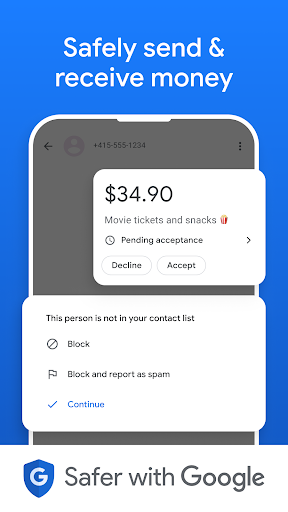
- →Regional Bank Payments — Send or receive money through supported bank and payment networks where the standalone app is offered.
- →Merchant Payments — Pay participating merchants through the payment methods and local flows available in your country.
- →Online Checkout — Use the Google Pay button in supported apps and websites with eligible payment methods saved to your Google account.
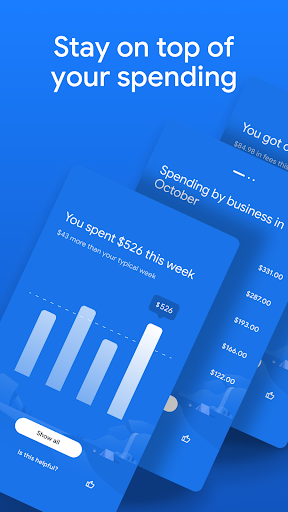
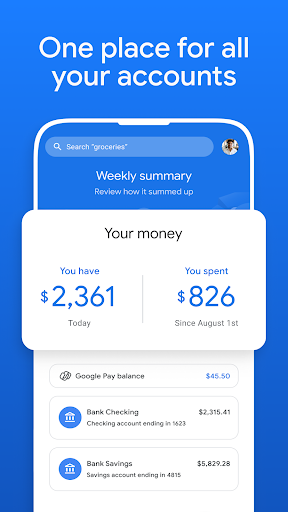
- →Payment Controls — Review activity and manage supported payment methods through Google Pay or Google Wallet, depending on region.
Final take
Google Pay can be useful in countries where its regional payment features are actively supported, but it should not be described as a universal contactless wallet. In the United States and several other markets, Google Wallet is the relevant app for contactless cards and passes. Check the official Play listing and Google's country-specific help pages before installing or depending on a particular payment feature.
Pros
- ✓Supports bank transfers and merchant payments in markets where the standalone app remains available
- ✓Uses payment methods saved to a Google account for faster checkout in supported apps and websites
- ✓Provides transaction history and payment controls within the supported regional experience
Cons
- ✗Features and availability vary substantially by country, so the Play listing is not a universal product
- ✗Contactless payments are handled through Google Wallet in markets such as the United States
- ✗Transfer protections and dispute options depend on the payment method and local banking system